World > Asia > United Arab Emirates

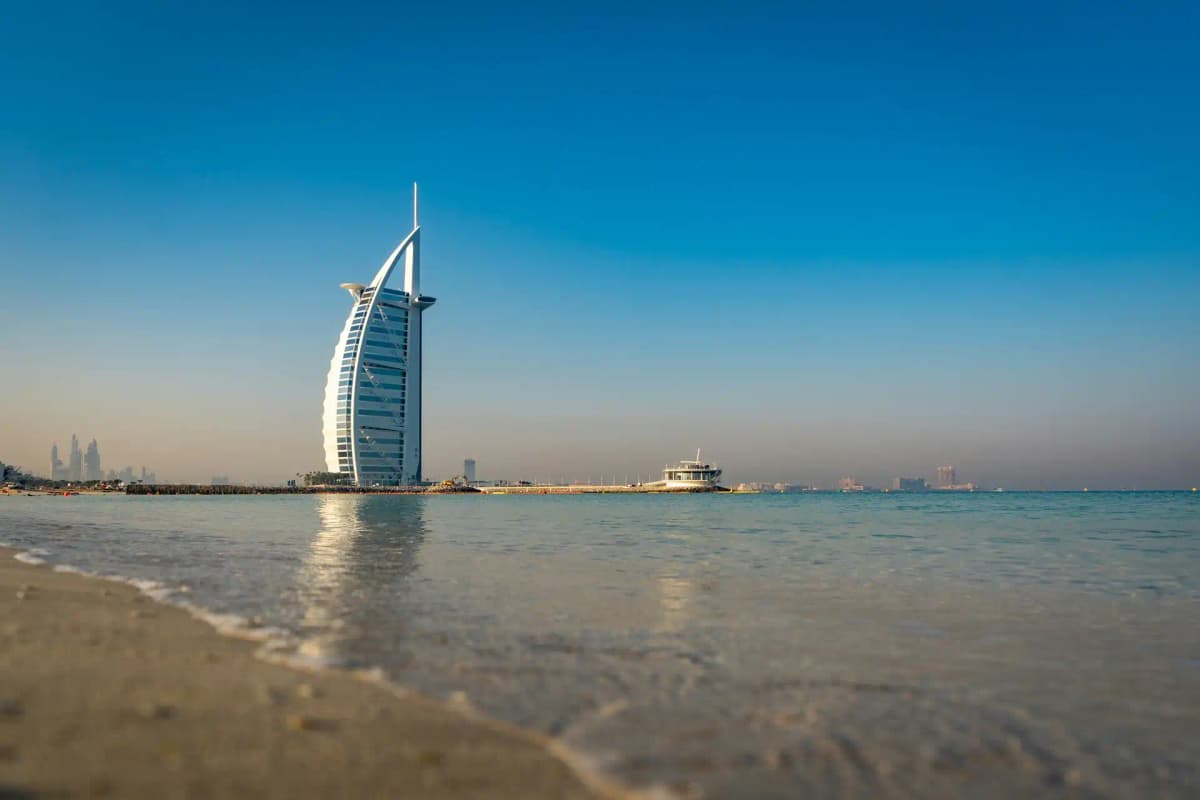
United Arab Emirates landscape

United Arab Emirates

Explore weather trends, climate data, and curated weather guides for United Arab Emirates

United Arab Emirates Climate Intelligence

Nestled on the Arabian Peninsula, the United Arab Emirates basks in a hot desert climate, offering sunshine virtually year-round. Expect scorching summers with high humidity, transitioning into milder, pleasant winters perfect for outdoor exploration. Discover detailed temperature averages and seasonal trends on WeatherBox to help plan your perfect trip or optimize your business operations in the UAE.

Average Temperature & Seasonal Trends in United Arab Emirates

How do temperatures shift month-by-month?

Temperature Map

How to Use This Map

  • Watch Seasons Change

    Click the Play button to start an animated timelapse of annual temperature shifts.

  • Explore Month-by-Month

    Drag the slider controls to pause on specific months and visualize detailed conditions.

Key Summary
  • Summer heat in the UAE regularly pushes daytime temperatures above 40°C (104°F), with coastal humidity adding significant discomfort from May to September.
  • A short, mild winter from December to February delivers the most comfortable temperatures, typically ranging from 20°C to 25°C (68°F to 77°F) during the day.
  • While the lowland desert and Gulf coast share similar extreme heat, the eastern Hajar Mountains and Fujairah’s Indian Ocean shoreline experience slightly cooler conditions.

The United Arab Emirates sits firmly inside a subtropical arid zone, producing an annual temperature rhythm dominated by a blazing summer and a brief, gentle winter. As indicated by the WeatherBox temperature map, the year swings from relatively bearable warmth to a prolonged stretch of exceptional heat. Inland desert locations and coastal cities alike see daytime highs that routinely climb beyond 40°C (104°F) between June and August, and it is not unusual for the mercury to reach the mid-40s (113–115°F) during the most intense spells. Coastal humidity, particularly along the Arabian Gulf in Dubai and Abu Dhabi, often pushes the felt conditions far above the actual air temperature, while the interior Empty Quarter bakes under a drier but equally unforgiving sun. Overnight lows in summer offer little relief, settling near 30°C (86°F) near the shore and dipping only a few degrees further inland. By contrast, the mild winter window sees genuinely pleasant afternoons with highs of 20–25°C (68–77°F), and night-time temperatures that can fall to 12–16°C (54–61°F), sometimes dropping below 10°C (50°F) in the deep desert.

Regional differences, though modest, are closely tied to geography and offer practical comfort for visitors. The broad coastal plain that hosts most of the population experiences peak summer discomfort when an oppressive blanket of humidity settles over cities from Abu Dhabi to Ras Al Khaimah. Inland oases such as Al Ain endure an even harsher dry desert heat but lack the muggy stagnation. The most meaningful variation shows up in the east, where the rugged Hajar Mountains create a cooler highland fringe. As the WeatherBox temperature map makes clear, a narrow band of slightly lower readings hugs the mountainous spine around Jebel Jais and the Gulf of Oman coastline near Fujairah. Here, daytime temperatures often run a few degrees below those of the western lowlands, and the marine breeze off the Indian Ocean tempers the searing edge of summer. This subtle cooling transforms outdoor possibilities: when Dubai’s streets are furnace-like, the shaded wadi trails and mountain roads of Fujairah and Ras Al Khaimah become far more inviting, and even short scenic drives feel restorative.

Most travellers find the period from November to March the most favourable season for experiencing the UAE with ease. Gloriously clear, sun-drenched winter days are ideal for unhurried strolls through the Al Fahidi Historical Neighbourhood, serene desert mornings among the dunes of the Liwa oasis, and long afternoons exploring the terraced gardens of Al Ain. Come June through September, the overwhelming heat renders prolonged outdoor exposure impractical for many, shifting tourism toward air-conditioned malls, indoor cultural attractions, and after-dark dining on waterfront boulevards. Packing for the UAE revolves around sun readiness and simple layering. Lightweight, breathable fabrics, a sturdy wide-brimmed hat, and high-factor sun protection are indispensable in every season. For the cooler desert nights and heavily chilled indoor spaces between December and February, a light sweater or shawl provides welcome comfort. Browsing the WeatherBox temperature map alongside monthly charts can help you fine-tune your arrival to catch the mildest stretches, whether you seek gentle beach days or desert adventures. Visit WeatherBox to explore deeper temperature data and interactive maps that make trip planning straightforward and well-informed.

Regional Humidity & Dew Point Patterns in United Arab Emirates

How does humidity vary across the country?

Humidity Map

Key Summary
  • Coastal cities endure oppressive, muggy summer humidity fuelled by The Gulf.
  • Inland desert regions stay much drier, offering a stark contrast in comfort levels.
  • Winter and early spring deliver pleasant, comfortable humidity ideal for tourism.

The United Arab Emirates sits along the southern shore of The Gulf, a geography that defines its humidity story. For much of the year, moisture streaming off the warm Gulf waters thickens the air over the coastal plain, where the majority of the country’s population and iconic cities lie. Our data at WeatherBox shows that from June through September, coastal relative humidity routinely ranges from 80–90% during the early morning, combining with searing heat to create very muggy to oppressive conditions. Inland, the vast Rub’ al Khali desert and gravel plains escape this marine influence, remaining dry and much more tolerable, as you can see on the WeatherBox humidity comfort index map. This split between a sticky coast and an arid interior defines the UAE’s humidity experience.

The coastal strip, anchored by Dubai and Abu Dhabi, experiences a long humid season where the heat index makes daytime exploration challenging. Sea breezes offer little relief, instead delivering stubbornly high humidity that intensifies the muggy feel around landmarks like the Burj Khalifa or the waterfront promenades of Abu Dhabi’s Corniche. Meanwhile, a short drive inland transforms the atmosphere. Al Ain, an oasis city at the foot of the Hajar Mountains, and the desert camps near the Liwa crescent sit in a dry zone where humidity often drops below 30%, even while coastal stations are sweltering. Winter months from November to March flip the pattern. The Gulf cools, lowering humidity to comfortable levels across the country. Days are warm and dry enough to enjoy dune bashing in the rolling sands of the Empty Quarter or strolls through the shaded walkways of Al Ain’s date palm oases without the weight of moist air.

For travellers, this means the prime window for a UAE visit coincides with the comfortable winter and early spring. From November to March, humidity stays low, and the clear skies are ideal for outdoor dining, desert safaris, and city sightseeing. By late May, the muggy season begins, and summer’s oppressive combination of heat and moisture makes midday activities uncomfortable; most visitors shift to indoor attractions like the Dubai Mall or Louvre Abu Dhabi. Packing should centre on light, breathable fabrics and sun protection year-round, but if your plans fall between June and September, prepare for persistent high humidity by choosing accommodation with good air conditioning and scheduling outings in the early morning. The UAE’s winter climate offers a gloriously dry, sun-soaked escape when much of the northern hemisphere is cold. Explore WeatherBox for our detailed humidity charts and interactive comfort index map to plan your trip around the most pleasant conditions.

How to Use This Map

Humidity Comfort Levels
Dry
Comfortable
Uncomfortable
Muggy
Very Muggy
Oppressive
  • Watch Seasons Change

    Click the Play button to start an animated timelapse of annual humidity shifts.

  • Explore Month-by-Month

    Drag the slider controls to pause on specific months and visualize detailed conditions.

  • Find Your Comfort Zone

    Use these insights to identify the ideal time to visit United Arab Emirates based on your weather preferences.

Climate Zones of United Arab Emirates (Köppen-Geiger Map)

What are the climate zones of United Arab Emirates?

Climate Map

Climate Classification Legend

Tropical
Af
Am
Aw
As
Dry
BWh
BWk
BSh
BSk
Temperate
Csa
Csb
Csc
Cwa
Cwb
Cwc
Cfa
Cfb
Cfc
Continental
Dsa
Dsb
Dsc
Dsd
Dwa
Dwb
Dwc
Dwd
Dfa
Dfb
Dfc
Dfd
Polar
ET
EF
Key Summary
  • The UAE is dominated by the hot desert climate (Köppen BWh), with year-round warmth, minimal rainfall, and abundant sunshine.
  • Coastal areas along The Gulf endure sweltering high humidity in summer, while the interior desert remains intensely dry and hot.
  • A small pocket of the Hajar Mountains in the east transitions to a semi-arid climate (BSh), receiving slightly more winter rain and offering cooler temperatures.

The United Arab Emirates sits squarely within the Earth’s arid subtropical belt, where the hot desert climate (BWh) covers almost the entire country. This Köppen zone means you can expect cloudless skies, extremely low annual rainfall, and persistently high temperatures. Geography dictates the nuances: a flat, sandy coastline merges into the vast Rub’ al Khali (Empty Quarter) dune fields in the south, while the rugged Hajar Mountains rise sharply in the east near the Oman border. These mountains wring out the little moisture carried on southeasterly winds, creating a small semi-arid climate (BSh) where winters feel fresher and wadis may flow briefly after storms. The rest of the country sits below an unwavering subtropical high-pressure ridge that stifles rain-bearing systems, leaving places like Abu Dhabi and Dubai with less than 100 millimetres (4 inches) of rain per year, much of it arriving in erratic winter bursts.

Seasonal and regional contrasts are stark, even within such a parched landscape. From June to September, coastal cities like Dubai and Sharjah stew in a combination of searing heat and high humidity dragged in from the warm Gulf; daytime highs routinely range from 40°C to 48°C (104°F to 118°F), with overnight lows often staying above 30°C (86°F). The interior desert around the Liwa Oasis is even hotter by day but lacks the muggy blanket, making it feel less oppressive during the famous golden-dune sunsets. Winter, from November to March, brings the most agreeable weather: temperatures settle between 20°C and 28°C (68°F to 82°F) during the day, dipping to a refreshing 12°C to 16°C (54°F to 61°F) at night. This is also the season for occasional shamal winds, which can whip up dust storms and cloud skies for a few days. In the semi-arid Hajar Mountains, places like Jebel Jais and the valleys around Fujairah see a few extra showers, coaxing thin green patches of vegetation and offering mornings cool enough for an outdoor coffee without the coastal clamminess.

Travel planning turns almost entirely on this winter window. For comfortable sightseeing, the lovely stretch from November through March delivers gloriously clear skies for strolling Dubai’s waterfront promenades, exploring the Grand Mosque in Abu Dhabi, or joining a gentle desert safari in the Arabian sands. April and October are transition months; you can still travel, but the heat builds quickly, especially inland. We strongly suggest avoiding the core summer period unless you intend to spend your days inside air-conditioned malls and hotels. Packing should centre on light, breathable fabrics, a broad-brimmed hat, and high-factor sunscreen year-round. If you travel in winter, a light jacket or pashmina is handy for cooler evenings and gusty shamal days. The UAE’s climate is essentially one of generous winter sun and extreme summer heat, a pattern you can explore in detail through our charts and data at WeatherBox. Let our Köppen climate classification maps and seasonal breakdowns help you pick the ideal month for your visit.

Find places with your ideal climate

Use our Climate Finder to search and rank locations by their temperature and humidity patterns.

Open Climate Finder

Compare Weather
in United Arab Emirates

See how temperatures, sunshine, and rainfall differ between any two locations on Earth

United Arab Emirates flag
DubaiUnited Arab Emirates
Change
United Arab Emirates flag
Abu DhabiUnited Arab Emirates
Change

Weather Guides

Explore comprehensive annual weather and climate insights for 9 locations in United Arab Emirates

Explore other locations in Asia