Key Summary- Bulgaria bridges continental and subtropical zones, giving most of the country distinct seasons with cold winters and warm to hot summers.
- The Köppen classification reveals a sharp divide: the northern plains and highlands fall under humid continental (Dfb), while southern valleys and the Black Sea coast shift to humid subtropical (Cfa).
- Mountain ranges like the Balkan and Rila-Pirin massifs create dramatic altitude-driven microclimates, from alpine snowfields to balmy seaside enclaves.
Bulgaria’s climate is shaped by its position in southeastern Europe, where continental air masses from the Russian steppe meet softer Mediterranean influences. The country’s two dominant Köppen zones tell the story. Across the Danubian Plain in the north and in the western high basins around Sofia, a humid continental (Dfb) climate prevails: winters are cold and often snowy, springs are damp, and summers turn pleasantly warm, though they can deliver brief heatwaves. South of the Balkan Mountains, in the Thracian lowlands and along the Maritsa River, the classification shifts to humid subtropical (Cfa). Here winters lose their bite, and summer heat is more persistent, occasionally pushing well past 30°C (86°F). The Black Sea coast refines this Cfa signal with a maritime softening that narrows temperature extremes and extends the beach-friendly season. In the highest elevations of the Rila and Pirin mountains, the climate grades into treeless alpine tundra (ET), where snow lingers into June. WeatherBox Köppen map captures these transitions, and our monthly charts let you see the temperature and rainfall gradients that the terrain produces.
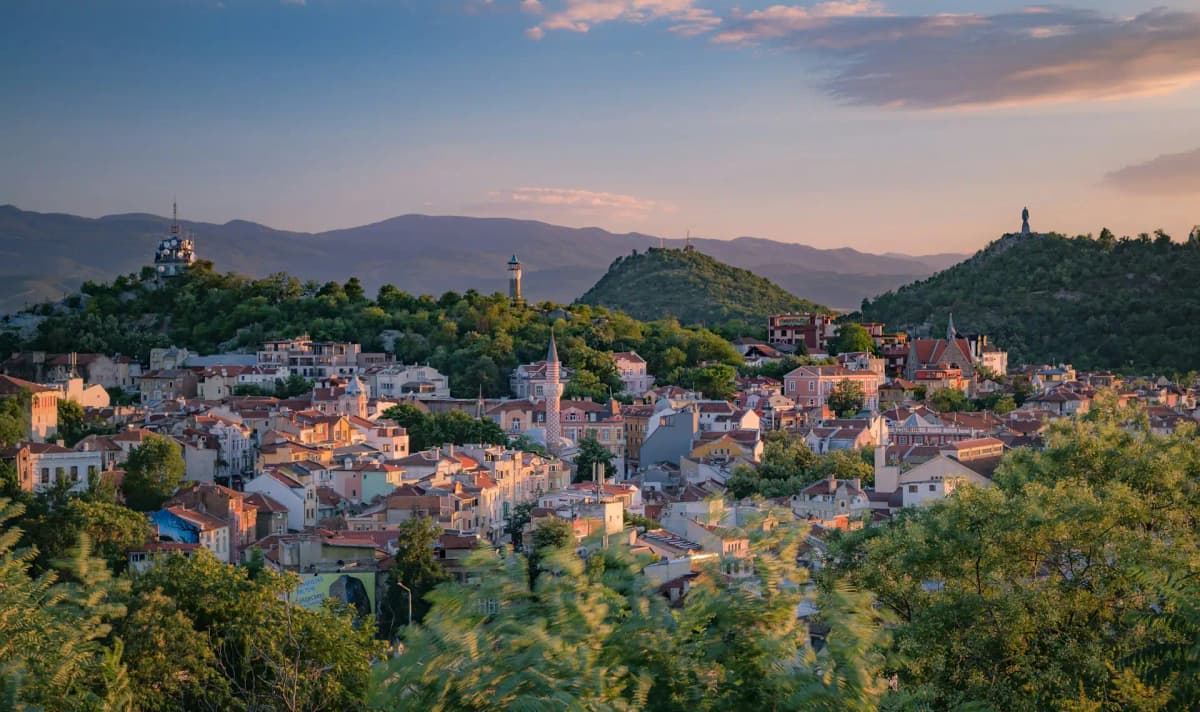
Regional differences are a direct result of Bulgaria’s topography. The east-west spine of the Balkan Mountains acts as a stout climatic barrier, blocking frigid winter winds from the north and trapping milder air over the southern plains. As a result, a winter stroll through the cobblestone streets of Plovdiv’s old town can feel significantly gentler than a similar one in Veliko Tarnovo on the northern slope. Spring and early summer bring the country’s most widespread rainfall, feeding the famous rose fields of the Kazanlak Valley at their May peak. The Black Sea coast from Varna to Burgas enjoys long, humid summers tempered by afternoon sea breezes, which makes the sun-lounger-lined beaches of Sunny Beach far more comfortable than inland heat spikes might suggest. In the southwest, the Struma valley sometimes flirts with a Mediterranean (Csa) pattern, with noticeably drier summers. By contrast, the Rila Mountains hoard winter precipitation as deep snow, sustaining popular ski centres like Bansko from December into March. Sofia’s high basin sees stubbornly cold winter nights and occasional fog, while Plovdiv usually basks in summer warmth. The interplay of latitude, elevation, and proximity to the sea means you can encounter dazzling snow in the mountains and mild, sunlit afternoons along the coast within the same country on the same day.
For travel, the most favourable windows are late spring and early autumn. May and June deliver lush green landscapes, comfortable temperatures typically between 18°C and 25°C (64°F - 77°F), and the short-lived rose bloom. September and October return mild, settled weather perfect for sightseeing in Sofia or exploring Thracian tombs without the high summer crowds. July and August bring dependable sun to the Black Sea, but inland cities like Plovdiv and Ruse often bake under highs of 33°C (91°F) or more, a heat worth respecting despite low humidity. Winter divides the country: the mountains become a stage for snow sports, while lowland towns settle into cold, grey-sky days where temperatures hover near freezing. Packing accordingly makes all the difference. Light, breathable fabrics, sun protection, and a water bottle suit the summer months; a raincoat and flexible layers serve the shoulder seasons; and a heavy coat, hat, and insulated footwear are wise for winter trips. Bulgaria’s climate rewards those who choose their season by activity. Use WeatherBox detailed climate charts to match your travel dates to the conditions you want, whether that means rose-scented valleys in May or firn-dusted slopes in January.