World > Europe > Ireland

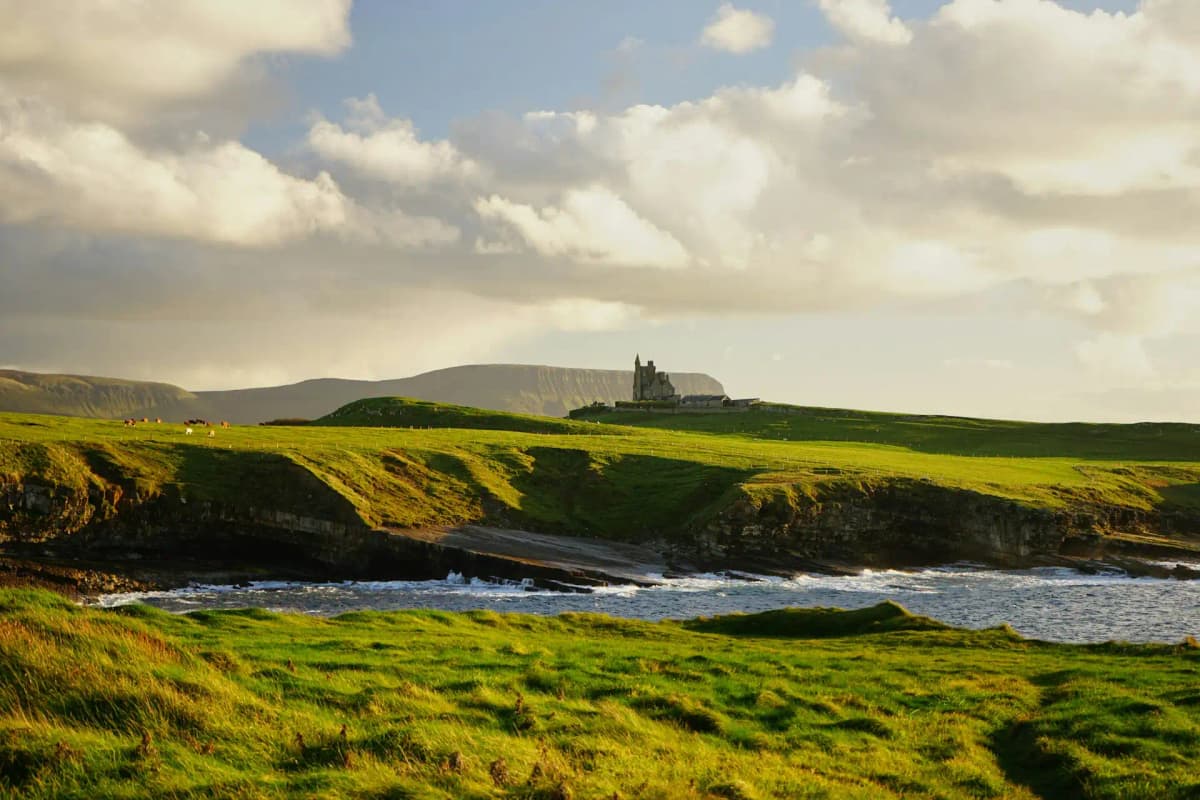
Ireland landscape

Ireland

Explore weather trends, climate data, and curated weather guides for Ireland

Ireland Climate Intelligence

Nestled on the western edge of Europe, Ireland boasts a famously temperate climate. Forget scorching summers and freezing winters; instead, expect mild, damp conditions year-round. Think cool summers and gentle winters. Rainfall is frequent, giving Ireland its lush green landscape. Planning a trip or need detailed climate data for your business? Explore WeatherBox for in-depth weather insights to help you prepare!

Average Temperature & Seasonal Trends in Ireland

How do temperatures shift month-by-month?

Temperature Map

How to Use This Map

  • Watch Seasons Change

    Click the Play button to start an animated timelapse of annual temperature shifts.

  • Explore Month-by-Month

    Drag the slider controls to pause on specific months and visualize detailed conditions.

Key Summary
  • Ireland’s maritime climate keeps annual temperatures mild, with winter lows rarely below freezing and summer highs mostly under 20°C (68°F).
  • The North Atlantic Drift moderates the entire coastline, giving the southwest the warmest winter conditions.
  • Subtle regional contrasts emerge, with the east and southeast slightly warmer and sunnier than the wind-exposed west.

Ireland’s air temperature pattern is shaped by the steady warming influence of the Atlantic Ocean. The North Atlantic Drift, a branch of the Gulf Stream, keeps sea temperatures moderate, which in turn compresses the range between summer and winter. Most lowland areas see average July and August highs of 17°C to 20°C (63°F to 68°F), while winter daytime values settle between 7°C and 10°C (45°F to 50°F). Overnight lows from December to February typically hover from 2°C to 5°C (36°F to 41°F). A dusting of frost or rare snow can occur, but prolonged freezing is uncommon. As the WeatherBox average temperature map illustrates, the island’s thermal profile is notably uniform, with only gentle shifts inland. Cloud cover and frequent drizzle are a near-constant, making the air feel damp even when the temperature reads mildly.

The WeatherBox temperature map hints at small but meaningful regional differences that colour your travels. The southwest, including the Iveragh and Beara peninsulas and the lakes of Killarney, receives the strongest ocean warmth, so winter frost is a rarity. The air here feels soft and moist, ideal for wandering the drizzle-kissed lanes of the Dingle Peninsula or the mossy woodlands of Glengarriff without heavy layers. The east and southeast, around Dublin, Wicklow, and Wexford, lie in a modest rain shadow, giving them Ireland’s highest summer readings. An afternoon near 21°C (70°F) is more common here, making seaside walks at Howth or Bray and exploring Georgian streets comfortable in just a light jacket. The western fringes, from Connemara to Donegal, receive the full force of prevailing Atlantic winds, so even in July the air stays cooler, typically 15°C to 18°C (59°F to 64°F). This keeps visits to the windswept Cliffs of Moher and the endless boglands refreshingly brisk. Inland, the Midlands can see the widest daily spread, with crisp, frosty winter mornings and still, pleasantly warm summer afternoons.

Temperatures alone paint a clear picture for your travel calendar. The optimal visiting window runs from May to September, when days are long and afternoon highs settle into a comfortable 15°C to 20°C (59°F to 68°F). May and June often deliver the most balanced weather, with fewer crowds than the peak of July and August. September retains lingering warmth and golden light, favourable for coastal drives and the last of the summer festivals. The cool, damp season from November to February brings daytime highs around 8°C to 10°C (46°F to 50°F) and the shortest days, but city breaks in Dublin or Galway remain atmospheric, with cosy pubs and live music. Packing is straightforward: a waterproof jacket is your most essential item every month of the year. Light sweaters, long-sleeved layers, and sturdy walking shoes will serve you well even in summer, when evening breezes can turn chilly near the coast. In midwinter, add a fleece or wool mid-layer and wind-resistant outerwear. Ireland’s climate is unassuming yet hospitable, rarely punishing but persistently damp. For detailed monthly temperature averages and to see how the WeatherBox map can refine your packing plans, visit WeatherBox.

Regional Humidity & Dew Point Patterns in Ireland

How does humidity vary across the country?

Humidity Map

Key Summary
  • Ireland’s maritime climate delivers persistently high humidity year-round, with levels typically between 80% and 90% relative humidity, though cool temperatures keep conditions mostly comfortable.
  • The west coast and upland areas endure the most damp, wind-driven moisture from Atlantic weather systems, while the eastern lowlands experience noticeably drier, more comfortable air, as highlighted by the WeatherBox humidity map.
  • Summer visitors can expect muggy days in sheltered valleys, but widespread comfortable humidity makes late spring and early autumn the prime seasons for touring iconic sites like the Cliffs of Moher or the Ring of Kerry.

Ireland’s location in the North Atlantic path of moist westerly winds creates a classic oceanic climate: mild, wet, and persistently humid. Relative humidity typically hovers between 80% and 90% year-round. However, with summer daytime temperatures rarely exceeding 20°C, the air almost never feels oppressive. Instead, the high moisture content manifests as a comfortable softness that gives the countryside its world-famous verdancy. WeatherBox humidity comfort indices reveal that most days across Ireland register as comfortable despite the high relative humidity.

Regional variation is largely shaped by the Atlantic. The entire west coast stares down prevailing southwesterlies, so counties like Kerry, Galway, and Donegal experience near-constant very high humidity and frequent drizzle, especially on hills and headlands. Refer to the WeatherBox humidity map to see a distinct comfort divide: coastal and mountainous western areas sit in more muggy or damp zones, while the eastern lowlands, shielded by the central plain and mountains, enjoy lower moisture levels and a higher incidence of comfortable days. If you visit Dublin’s Trinity College or the ancient passage tombs of the Boyne Valley, you will notice drier air compared to the drizzle-soaked cliffs of Moher. Inland sheltered valleys, such as around Killarney’s lakes, can feel muggy on windless summer days when humidity lingers. Autumn and winter bring uniform dampness everywhere, with a raw, moist chill that seeps through layers, but spring often rewards with crisp, comfortable afternoons.

For travel, May, June, and September offer the best overlap of comfortable humidity and pleasant temperatures, making them optimal for rambling the Ring of Kerry or exploring the Giant’s Causeway. July and August can be stickier in low-lying inland spots like the Shannon waterways, though outright oppressive humidity is almost unheard of. A waterproof outer layer is a year-round essential, as even seemingly dry periods can suddenly deliver a fine, penetrating mist. Light, breathable layers serve well during the rare muggy spell, and a wind-resistant jacket becomes a true friend on Atlantic-facing headlands. Never forget that Ireland’s ever-present moisture is the artist behind its luminous landscapes and the soft light that enchants visitors. For a detailed view of humidity comfort across counties and seasons, we invite you to explore the interactive map on WeatherBox and plan your trip with confidence.

How to Use This Map

Humidity Comfort Levels
Dry
Comfortable
Uncomfortable
Muggy
Very Muggy
Oppressive
  • Watch Seasons Change

    Click the Play button to start an animated timelapse of annual humidity shifts.

  • Explore Month-by-Month

    Drag the slider controls to pause on specific months and visualize detailed conditions.

  • Find Your Comfort Zone

    Use these insights to identify the ideal time to visit Ireland based on your weather preferences.

Climate Zones of Ireland (Köppen-Geiger Map)

What are the climate zones of Ireland?

Climate Map

Climate Classification Legend

Tropical
Af
Am
Aw
As
Dry
BWh
BWk
BSh
BSk
Temperate
Csa
Csb
Csc
Cwa
Cwb
Cwc
Cfa
Cfb
Cfc
Continental
Dsa
Dsb
Dsc
Dsd
Dwa
Dwb
Dwc
Dwd
Dfa
Dfb
Dfc
Dfd
Polar
ET
EF
Key Summary
  • Ireland’s climate is overwhelmingly temperate oceanic (Köppen Cfb), shaped by mild, damp winters and cool, cloudy summers with little temperature extremes.
  • Prevailing westerly winds off the Atlantic deliver abundant moisture, making the western coast and mountains far wetter than the sheltered eastern lowlands.
  • Rain occurs year-round without a true dry season, but late spring and early summer often bring the driest and brightest spells, especially in the rain-shadowed southeast.

Ireland’s location at the edge of northwestern Europe places it squarely in the path of moist Atlantic air masses, yet the North Atlantic Drift keeps the island much milder than its northerly latitude would suggest. The dominant climate across nearly the entire island is temperate oceanic (Cfb), a classification that signals no dry season, modest temperature swings, and frequent cloud cover. Winters are cool rather than cold, with lowland temperatures typically clinging to 2°C–8°C (36°F–46°F), while summer ordinarily reaches a gentle 13°C–19°C (55°F–66°F). Freezing nights and real heatwaves are rare and fleeting. This constant moisture, softly delivered, is what paints the countryside in its legendary forty shades of green. At WeatherBox, our climate charts and monthly averages let you see at a glance just how evenly distributed Ireland’s rainfall and mild temperatures remain throughout the year.

Geography dramatically refines these broad patterns. As moist maritime winds sweep inland, the rugged highlands of Kerry, Connemara, and Donegal wring out heavy and persistent rainfall, creating a markedly wetter climate in the west and northwest. Here, places like the windswept Cliffs of Moher experience frequent drizzle and dramatic squalls that roll in quickly off the grey Atlantic. By contrast, the eastern counties around Dublin lie in a modest rain shadow, receiving noticeably less rainfall and recording slightly warmer afternoon highs during summer. Still, even in the capital you are rarely far from a shower, and overcast conditions remain common. On the highest summits above roughly 600 metres, the climate dips into a subpolar oceanic (Cfc) zone, where summers become cooler and cloud more stubbornly persistent. Whether you are wandering the rain-soaked streets of Galway or admiring the drizzle-kissed gardens of the Wicklow Mountains, the interplay between terrain and ocean wind defines the character of every landscape you encounter.

For the traveller, the most inviting window for general sightseeing stretches from May to September, when daylight extends late into the evening and temperatures are at their most comfortable for enjoying long strolls through historic sites or quiet coastal drives. This is when you can best soak up the buzz of a long summer evening in an outdoor market or riverside pub garden, though a waterproof layer remains essential even in midsummer. Winter visits between November and February bring their own snug charm with roaring fires and crowd-free museums, but they also deliver the shortest days, frequent gales, and a high chance of persistently wet conditions. Packing well means prioritising layered clothing, a sturdy raincoat, and footwear that can handle sudden muck and puddles, because Atlantic breezes often make short work of umbrellas. For anyone timing a garden tour in the southeast or planning a drive along the Wild Atlantic Way, WeatherBox offers detailed monthly climate data to help you navigate Ireland’s famously soft, ever-changing weather with a little more confidence.

Find places with your ideal climate

Use our Climate Finder to search and rank locations by their temperature and humidity patterns.

Open Climate Finder

Compare Weather
in Ireland

See how temperatures, sunshine, and rainfall differ between any two locations on Earth

Ireland flag
DublinIreland
Change
Ireland flag
CorkIreland
Change

Weather Guides

Explore comprehensive annual weather and climate insights for 34 locations in Ireland

Explore other locations in Europe