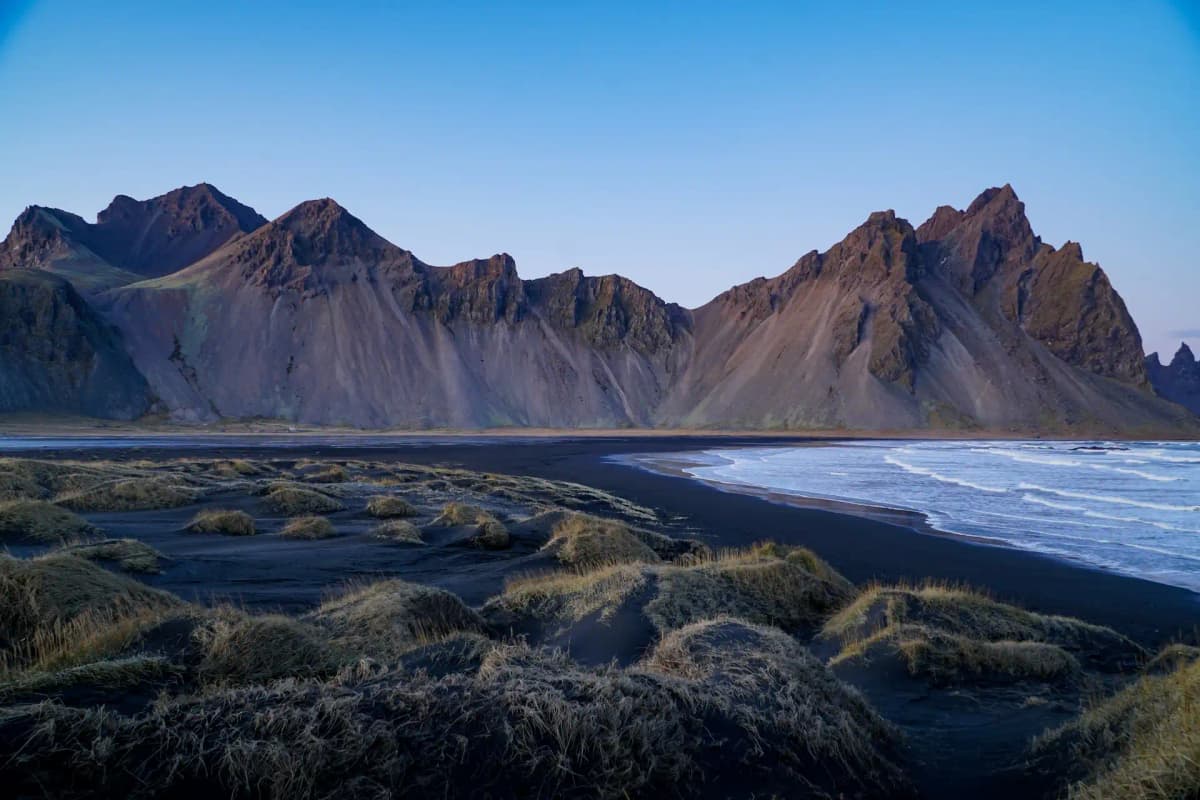
Key Summary- Iceland’s climate is a mosaic of tundra (ET) and subpolar oceanic (Cfc) zones, with permanent ice cap (EF) on the highest glaciers, all strongly influenced by the North Atlantic.
- Despite sitting just below the Arctic Circle, the Gulf Stream keeps coastal areas, especially the south, far milder in winter than the latitude suggests, while the interior highlands remain cold and windswept year-round.
- Weather is famously changeable, with frequent coastal rain, sudden wind shifts, and long summer daylight contrasting sharply with the deep darkness of winter, making flexible layers and waterproof gear essential.
Iceland’s Köppen climate classification reveals a land of stark climatic contrasts. Most of the country falls within the tundra (ET) category, where the warmest month averages between 0°C and 10°C (32°F and 50°F). The southern and southwestern coastal lowlands, including Reykjavik, enjoy a subpolar oceanic (Cfc) climate, characterised by cool summers, no dry season, and relatively modest temperature swings. Inland and at higher elevations, the terrain transitions into true ET conditions, while the massive ice caps of Vatnajökull and Langjökull are classified as ice cap (EF). This climatic pattern is shaped directly by the island’s geography. The North Atlantic Drift, an extension of the Gulf Stream, delivers mild, moisture-laden air to the south coast, while the cold East Greenland Current chills the north and east. The mountainous backbone of the country wrings out that moisture, creating a rain-soaked south and a noticeably drier, snowier north. Even in summer, the central highlands remain a raw, treeless tundra swept by fierce winds and slashing sleet.
The regional climate differences translate into strikingly varied travel conditions. The south coast, under the influence of the subpolar oceanic (Cfc) regime, is perpetually damp, with drizzle-soaked lava fields and waterfall-draped cliffs like Skógafoss and Seljalandsfoss. Daytime temperatures here in summer typically range from 10°C to 15°C (50°F to 59°F), while winter hovers around freezing with rain and wet snow. Further north, around the Eyjafjörður region and Lake Mývatn, the tundra (ET) climate dominates, bringing colder, more stable winters with plentiful dry snow and better odds of clear nights for viewing the northern lights under the deep winter darkness. The Westfjords lie under similar ET conditions, often buried in deep snow well into spring, their dramatic fjord walls cloaked in quiet white. In the highlands, accessible only in mid-summer by 4×4, you can encounter bright long summer days illuminating the otherworldly rhyolite mountains, but the weather can turn to horizontal sleet within minutes. By contrast, the midnight sun of June and July bathes geothermal valleys like Haukadalur in a soft, lingering glow, ideal for soaking in a hot spring surrounded by steaming, moss-covered terrain.
For travellers, these climate patterns carve the year into distinct seasons. The most forgiving window runs from June to August, when long summer days and milder temperatures make the entire Ring Road and popular waterfalls comfortably accessible, even as rain and wind remain stubbornly frequent. Winter, from November to March, brings limited daylight, icy roads, and the closure of highland tracks, but also the chance to see frozen cascades and hunt for the aurora beneath dark, snowy skies. The shoulder months of May and September often deliver rapid transitions, where you might wake to sun and be driving through blowing sleet by afternoon. Packing with the subpolar reality in mind is straightforward: a waterproof and windproof outer shell, insulating fleece, sturdy shoes, and a warm hat are non-negotiable in any season. In winter, add thermal base layers, thick gloves, and a buff to shield against the raw coastal gusts. Summer visitors still need rain gear and a warm mid-layer for evenings. Iceland’s climate is a moody, beautiful force that rewards those who arrive prepared. At WeatherBox, we bring this climate into focus with monthly breakdowns, temperature and precipitation averages, and detailed weather charts that help you time your visit around the country’s shifting conditions. Explore our data to build a trip that aligns with the Iceland you want to see.