Key Summary- Saint Lucia’s air temperatures remain warm and steady year-round, with coastal daytime highs typically hovering around 29°C (84°F).
- Gentle trade winds consistently moderate the tropical heat, especially on the breezier east coast, while the interior highlands offer a slightly cooler escape.
- The main seasonal shift is in rainfall rather than temperature, with a drier period from December to May and a wetter season from June to November.
Saint Lucia enjoys a classic tropical maritime climate, which means you can expect comfortably warm air temperatures no matter when you visit. At sea level, daytime maximums typically range from 28°C to 31°C (82°F to 88°F), while nighttime lows rarely dip below 22°C to 24°C (72°F to 75°F). What makes the heat feel less intense than those numbers might suggest is the near-constant presence of the northeast trade winds. These breezes are an integral part of the island’s weather personality, whisking away humidity along exposed shorelines and making sun-soaked afternoons far more pleasant. As indicated by the WeatherBox temperature map, the warmest pockets almost always align with the low-lying coastal strips, particularly in sheltered western bays where the wind’s cooling influence diminishes. The sea itself maintains a bath-like warmth, usually 27°C to 29°C (80°F to 84°F), which keeps the air temperature stable and contributes to the feeling of endless summer.
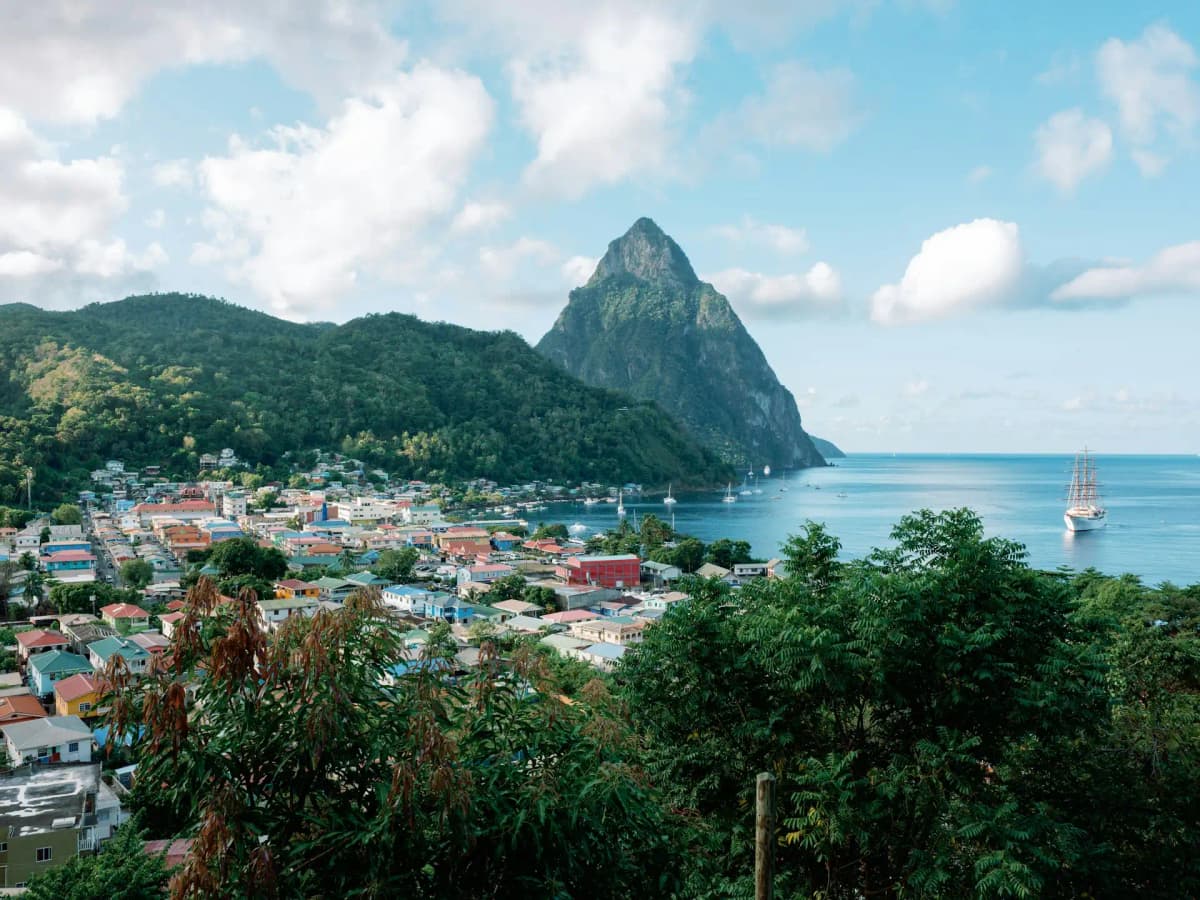
Despite the island’s compact size, subtle regional temperature variations do emerge thanks to its volcanic topography. The breezy east coast, facing the Atlantic, receives the full force of the trade winds, which can make areas around Dennery feel a shade fresher than the calmer Caribbean-facing west coast. Head inland and elevation becomes the main cooling factor. The central mountain spine, crowned by Morne Gimie, and the rainforests of the Edmund Forest Reserve experience noticeably cooler highland temperatures, often settling around 24°C to 26°C (75°F to 79°F) during the day. This dip creates a welcome natural air-conditioning for walks beneath the dense canopy, where misty mornings give way to dappled, mild afternoons. The far south around Vieux Fort tends to be drier and slightly warmer, while the iconic Pitons near Soufrière bask in humid tropical warmth. When you refer to the WeatherBox temperature map, you can see how these inland gradients soften towards the coast, reinforcing that most of Saint Lucia’s best-known attractions, from the golden sands of Reduit Beach to the waterfront cafés of Rodney Bay, sit in the reliably balmy lowlands.
For travel planning, the temperatures themselves rarely rule out any month, but understanding the rhythm of the seasons will help you match conditions to your comfort. The drier period from December to May aligns with sunny, settled skies ideal for lounging on the beach, snorkelling in the calm, clear waters of Anse Chastanet, or exploring the island’s botanical gardens without the interruption of sudden downpours. The wetter season from June to November brings increased humidity and afternoon showers that can roll in quickly over the interior peaks before sweeping across the coast. This is also the official Atlantic hurricane season, and while Saint Lucia sits near the southern edge of the typical hurricane belt, occasional tropical waves can bring heavier rain and gusty winds. It is wise to pack accordingly: light, breathable fabrics, a sturdy sun hat, high-factor sunscreen, and a lightweight raincoat or umbrella for those sharp tropical showers. Even during the rainiest stretches, temperatures remain warm, so a visit never requires cold-weather gear. Saint Lucia’s air temperature story is one of remarkable consistency, a year-round tropical embrace tempered by trade winds and gentle highland relief. For deeper insight into monthly averages and regional differences, explore the full WeatherBox temperature charts and start shaping your ideal island itinerary.