Key Summary- Morocco’s geography splits the country into distinct temperature zones, with a mild coastal fringe giving way to scorching inland plains and freezing winter nights in the desert and mountains.
- The Atlas Mountains act as a climatic barrier, trapping hot, dry Saharan air to the south and allowing cooler, Mediterranean influences along the coast.
- The most comfortable temperatures for travel generally fall in spring and autumn, when clear skies and moderate daytime warmth make exploring cities and ancient sites a pleasure.
In broad terms, Morocco sits at the northwestern corner of Africa, where the Atlantic Ocean and Mediterranean Sea soften the edges of a vast, sun-baked interior. As you can see on the WeatherBox temperature map, annual conditions are heavily shaped by the country’s four major geographic bands: the narrow coastal plains, the fertile inland lowlands, the High Atlas spine, and the Sahara fringe. Coastal cities such as Casablanca and Rabat enjoy a maritime buffer, with average highs typically hovering between 18°C and 26°C (64°F to 79°F) through the year. Move inland just a few dozen kilometres and the climate becomes decidedly continental. In Marrakech, daytime highs in the long summer season routinely climb to between 35°C and 40°C (95°F to 104°F), while winter afternoons settle closer to a pleasant 19°C to 22°C (66°F to 72°F). Once you cross the Atlas range, you enter the pre-Saharan zone, where the mercury behaves more dramatically still, with searing daytime peaks and a sharp drop once the sun goes down.
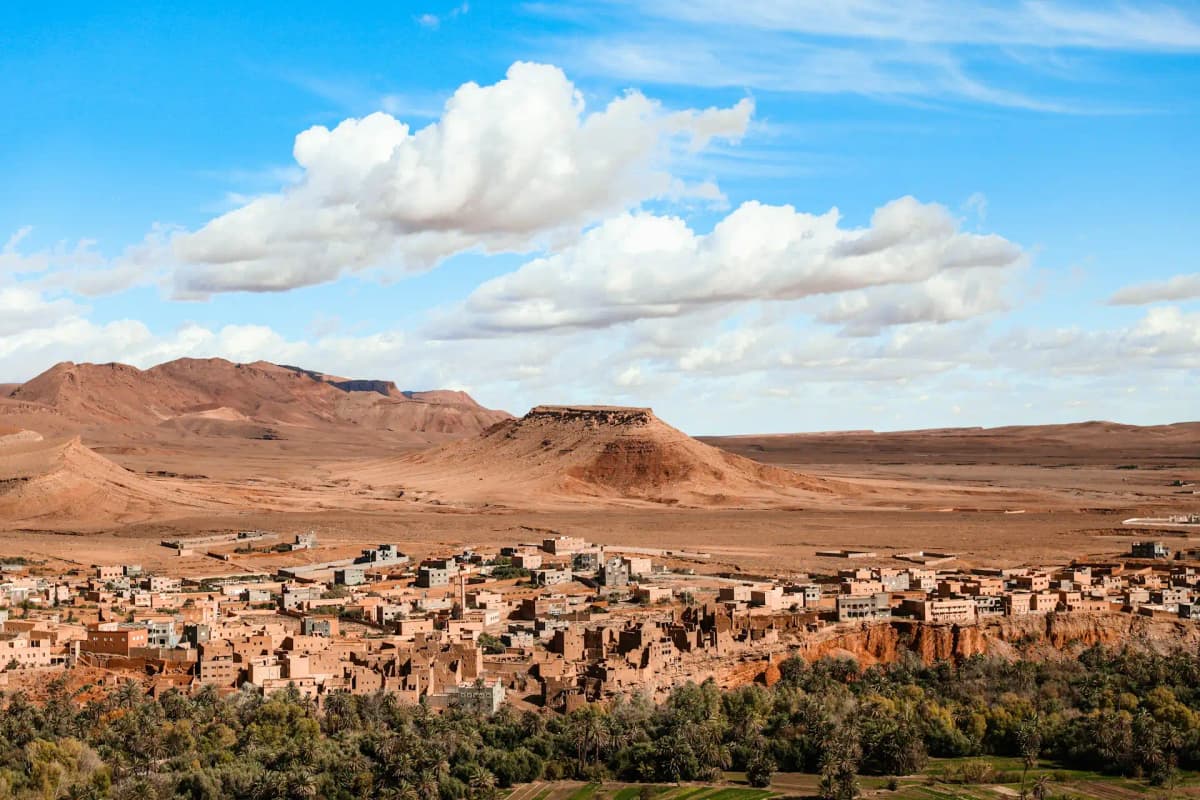
The regional contrasts are what many visitors notice most. Along the Atlantic coast, places like Essaouira see cool onshore breezes hold afternoon highs around 22°C to 26°C (72°F to 79°F) in summer, making it a refreshing retreat for wandering the blue-and-white alleyways or relaxing on the sandy beach. The Mediterranean side, around Tangier and the Rif Mountains, stays similarly moderate. Inland, the imperial cities of Fes and Meknes swelter under intense dry heat from June through September, with temperatures routinely pushing past 38°C (100°F). Here, early morning is the best time for admiring intricate zellij tilework or the scent of leather tanneries before the heat settles in. The Atlas Mountains bring a different equation entirely. Winter transforms the high passes into a snowy world, with crisp days and nights well below freezing, while summer offers comfortable warmth for exploring Berber villages. Further south, the dunes of Erg Chebbi and Erg Chigaga deliver classic desert extremes: daytime highs often surpass 40°C (104°F) in July and August, but between November and February the nights can be genuinely cold, dipping to near 5°C (41°F). Refer to the WeatherBox temperature map and you will see these cool pockets in the mountains and the hot interior standing out clearly against the temperate coasts.
When planning a visit, the interplay between temperature and comfort becomes essential. Spring (March to May) and autumn (September to November) bring the most balanced conditions for exploring Morocco’s atmospheric medinas, ancient Roman ruins at Volubilis, or the palm-fringed oases of the south. In these windows, daytime temperatures generally range from 22°C to 30°C (72°F to 86°F) in the cities, with gloriously clear skies for sunset views over the Jemaa el-Fna square. The summer months can be fiercely hot across the interior, making coastal destinations or mountain foothills the wiser choice. Winter is often sunny and gentle along the coast, but it brings chilly nights everywhere and occasional rain, so a warm layer and a waterproof shell are handy. If you plan to spend a night in the desert or cross the Atlas between December and February, be ready for near-freezing temperatures after dark. Year-round, sun protection and light, breathable fabrics are sensible, while a scarf or jacket for cooler evenings keeps you comfortable almost anywhere. Morocco’s climate offers striking variety, and travelling with the temperature patterns in mind can turn a good trip into a more pleasant one. For deeper insights and month-by-month data that help you match your journey to your comfort zone, explore the full collection of charts and planning tools on WeatherBox.