Key Summary- Malaysia sits squarely in the equatorial zone, meaning almost the entire country experiences a tropical rainforest climate (Köppen Af) with uniformly high temperatures and stubbornly high humidity.
- The northeast monsoon dictates the strongest seasonal rhythm, lashing the east coast and Borneo with heavy rain from November to March, while the west coast enjoys a relative lull.
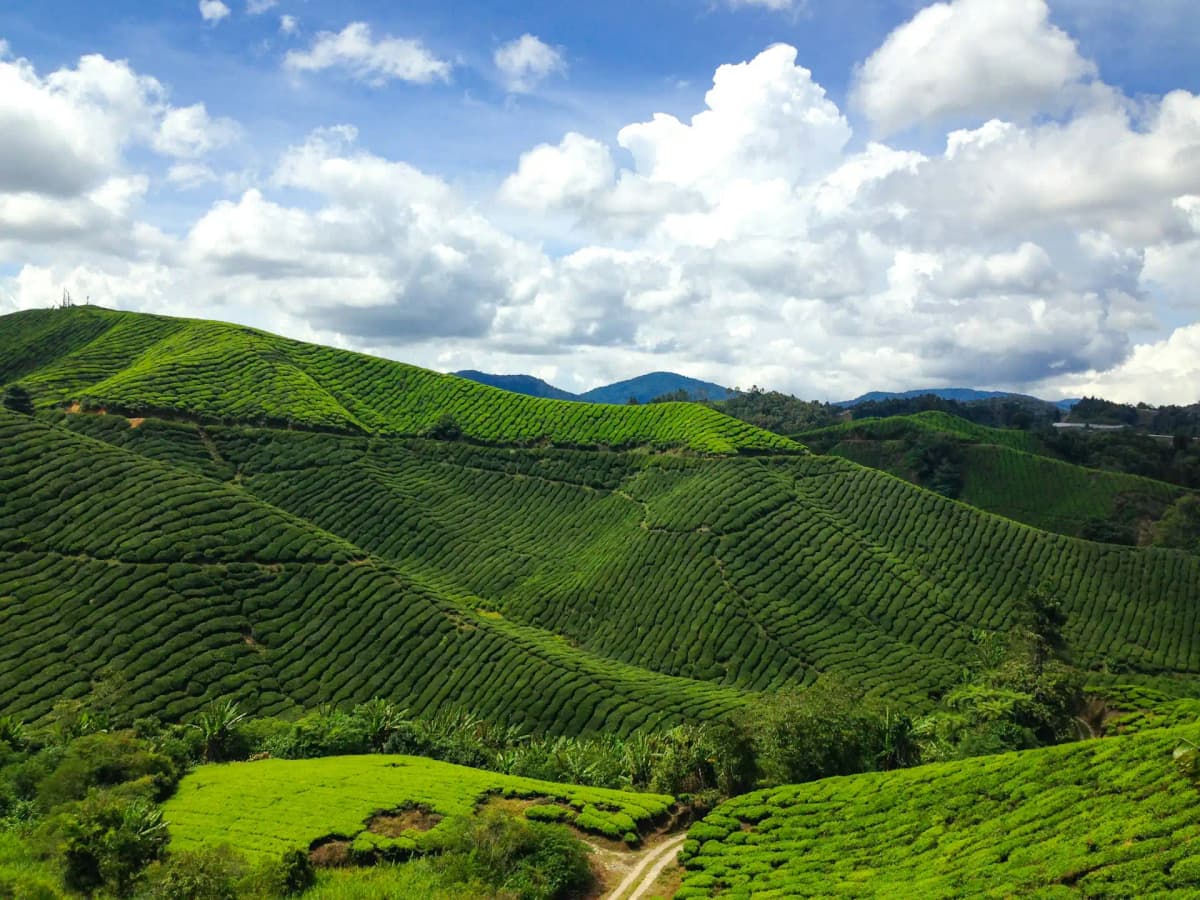
- Pockets of cooler highlands, classified as subtropical highland climate (Köppen Cfb) around the Cameron Highlands, deliver a gentle break from the lowland stickiness.
Endlessly green and perennially warm, Malaysia’s climate is defined by a lack of seasons in the traditional sense. Latitude, sitting between 1°N and 7°N, gifts the country a uniform heat where daily maximums typically range from 30°C to 34°C (86°F to 93°F) at sea level and rarely dip below 23°C (73°F) at night. The dominant tropical rainforest climate (Köppen Af) means rainfall is abundant year‑round, often arriving as intense afternoon convectional showers that leave the air refreshed and saturated. A thin ribbon of land along the west coast and parts of Sabah nudges into the tropical monsoon climate (Köppen Am), where a short, slightly drier period barely registers against the surrounding wet months. The most striking climatic anomaly is the cooler highlands of the interior, where altitude tugs temperatures down to a comfortable 15°C to 25°C (59°F to 77°F), a setting that feels almost un‑Malaysian in its crispness. Geography is the linchpin: the peninsula’s central mountain spine and Borneo’s towering Crocker Range wrench moisture from prevailing air masses, feeding the country’s legendary lushness.
The real story is told in wind and water, not temperature. Two monsoon systems shape where and when the downpours land hardest. The northeast monsoon, blowing from the South China Sea between November and March, saturates the east coast of the peninsula, northeastern Sarawak, and coastal Sabah. Meanwhile, the west coast — including Langkawi, Penang, and Pangkor — sits in a drier rain shadow, enjoying fair, sunny weeks ideal for beach strolls and cable‑car views over a rainforest canopy. From April to October, the southwest monsoon flips the script, delivering squally afternoon bursts to the west coast while the east turns calmer and its reefs beckon with gloriously clear water. Between these two flanks, the inter‑monsoon periods (March–April and October–November) are notorious for chaotic, late‑afternoon thunderstorms that boil up over the highlands and sweep across the lowlands. Borneo’s interior, particularly the Danum Valley rainforest, stays wet regardless of monsoon phase, its ferns and dipterocarp giants drinking from near‑daily soakings. This rhythm means you can always find a dry corner of Malaysia if you follow the monsoon calendar.
For the traveller, Malaysia’s climate is less an obstacle and more a scheduling tool. The optimal window for east‑coast islands and the dazzling coral gardens of Sipadan runs from April to September, when seas are flat and visibility is peak. The west coast islands and the cultural arteries of Melaka and George Town are year‑round propositions, though you will want a brolly handy during the inter‑monsoon deluges. Pack like a local: the heaviest item in your bag should be a light raincoat, and everything else must be breathable fabrics — cotton, linen, quick‑dry synthetics — that surrender to the inevitable humidity. Sun protection is non‑negotiable even on overcast days; the equatorial sun punches through cloud without apology. The cooler highlands demand a thin jumper for evening walks through the drizzle‑soaked tea plantations of the Cameron Highlands, a small packing nuance that repays you with mist‑wrapped mornings. Ultimately, Malaysia offers a warm, wet, and wonderfully predictable climate pattern that rewards flexibility. WeatherBox brings this clarity to life in our charts and interactive maps, where you can probe the rhythms of the monsoon and the pockets of mountain cool, helping you step into the tropical flow at just the right moment.