World > Oceania > New Zealand

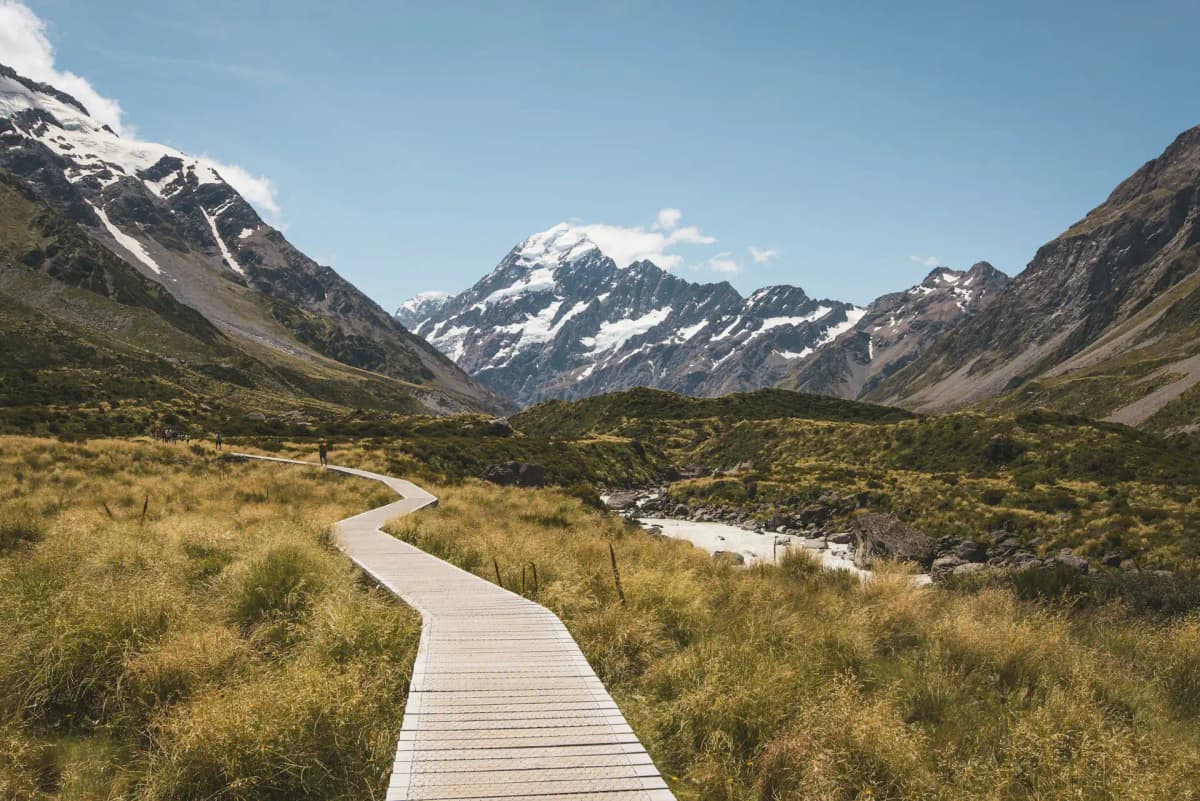
New Zealand landscape

New Zealand

Explore weather trends, climate data, and curated weather guides for New Zealand

New Zealand Climate Intelligence

Located in the southwestern corner of the Pacific Ocean, New Zealand boasts a temperate climate characterized by mild, wet winters and warm, dry summers. With four distinct seasons, the islands offer a diverse range of weather patterns, influenced by their latitude and maritime location. Whether you're planning a scenic road trip or strategizing for your business operations, understanding New Zealand's weather is crucial. Discover detailed weather insights and regional variations on WeatherBox!

Average Temperature & Seasonal Trends in New Zealand

How do temperatures shift month-by-month?

Temperature Map

How to Use This Map

  • Watch Seasons Change

    Click the Play button to start an animated timelapse of annual temperature shifts.

  • Explore Month-by-Month

    Drag the slider controls to pause on specific months and visualize detailed conditions.

Key Summary
  • New Zealand’s maritime climate delivers moderate but highly changeable temperatures year-round, with the North Island noticeably warmer than the South Island.
  • The Southern Alps create a stark dividing line, producing a wet, mild west coast and a drier, sunnier east with crisp alpine zones inland.
  • The most enjoyable travel temperatures usually emerge during the extended shoulder seasons of spring and autumn, while high summer brings peak warmth and winter offers cold, snowy landscapes.

Air temperatures across New Zealand reflect its oceanic setting and elongated geography, as the WeatherBox temperature map vividly illustrates. Wrapped by the Tasman Sea and South Pacific, the country rarely sees the scorching heat or deep freezes common in continental landmasses. Instead, you encounter a temperate band where coastal daytime highs in summer typically range from 20°C to 25°C (68°F to 77°F) in the north, gradually cooling as you head south. Winter highs generally hover between 10°C and 15°C (50°F to 59°F) across much of the North Island, while the South Island expects 5°C to 12°C (41°F to 54°F), with frosty mornings well below freezing inland. That maritime influence means conditions can shift quickly; a clear, sunny morning may give way to a blustery squall by afternoon, no matter the season.

Regional contrasts are carved by the towering spine of the Southern Alps, and you can trace them easily on the WeatherBox temperature map. Subtropical north zones like the Bay of Islands and Auckland enjoy warm, humid summers and mild winters, ideal for the golden beaches and island-hopping day trips. The central volcanic plateau around Rotorua, with its steaming geothermal parks, sees cooler nights and a crispness in the air even in summer. Cross to the South Island and the divide sharpens. The West Coast receives a steady cloak of temperate rainforest drizzle, keeping temperatures mild but damp year-round; here, visits to the glacier-carved valleys of Fiordland are often wrapped in mist. By contrast, the rain shadow east—cities like Christchurch and the vineyard-laced Canterbury Plains—revels in decidedly drier, sunnier weather, with summer highs frequently pushing into the upper 20s°C (above 80°F). Inland, Central Otago’s semi-continental pocket around Queenstown endures the most alpine seasonal extremes: hot, dry days in midsummer and brittle, frosty winters where overnight lows dip several degrees below 0°C (32°F), cloaking the Remarkables mountain range in snow.

Travel planning hinges on how you hope to encounter New Zealand’s air. The peak summer window (December to February) reliably delivers the warmest, longest days, ideal for swimming off the Coromandel Peninsula or exploring Abel Tasman National Park’s golden coves, but strong UV demands diligent sun protection and light, breathable fabrics. It is also the busiest period. The cold season (June to August) transforms the South Island into a winter sports haven with frozen alpine scenery; you will need insulated layers and a waterproof outer shell. For many, the shoulder months of spring (September to November) and autumn (March to May) offer the most favourable compromise. Temperatures remain mild, the crowds thin, and the air feels especially suited to leisurely wanderings through misty fiords or the sun-dappled vine rows of Marlborough. Rain can appear at any time on either island, so a packable raincoat is a wise constant companion. With few punishing extremes of heat or cold, the climate is forgiving, but its diversity across short distances is what defines the experience. To dig into month-by-month temperature ranges and microclimates across every region, explore the full WeatherBox temperature map and travel planning insights.

Regional Humidity & Dew Point Patterns in New Zealand

How does humidity vary across the country?

Humidity Map

Key Summary
  • New Zealand's maritime climate keeps humidity moderate year-round, with most regions in the comfortable range outside of summer.
  • Northland and Auckland experience the highest humidity, where summer months can feel muggy, while the eastern South Island remains dry thanks to the rain shadow of the Southern Alps.
  • Coastal areas and the West Coast are persistently damp, with moisture levels peaking in winter, as highlighted on the WeatherBox humidity map.

New Zealand's temperate island climate rarely suffers oppressive humidity. Surrounded by the Tasman Sea and Pacific Ocean, the air is consistently moist but the lack of continental extremes keeps most days feeling fresh rather than stifling. As the WeatherBox humidity comfort index shows, large parts of the country are rated comfortable for much of the year. Coastal towns typically see relative humidity in the 70-80% range, which feels slightly muggy in summer but is rarely unpleasant. Even in the far north, where conditions lean subtropical, prevailing westerlies and changeable weather prevent conditions from turning oppressive.

Geography dictates the regional humidity picture more than anything else. The towering Southern Alps split the South Island into two distinct moisture zones. On the West Coast, moisture-laden winds from the Tasman Sea rise over the mountains, delivering persistent rainfall and keeping the air perpetually damp; Fiordland’s fern-filled rainforests and glacier valleys thrive on this reliably high humidity. As indicated by the WeatherBox humidity map, the eastern side of the South Island, from Marlborough down through Canterbury and Central Otago, shelters in the rain shadow. Here the air is noticeably drier, and summer days are warm with comfortable humidity levels, ideal for the sun-drenched vineyards of Marlborough and lakeside Queenstown. In the North Island, humidity trends are more uniform but still show a gradient. Northland and Auckland feel muggy during January and February, when humidity can climb into the very muggy category on the index. Wellington’s wind moderates the moisture, while Lake Taupō’s volcanic plateau remains drier and comfortable.

For travellers, the interplay of humidity and season helps shape the ideal itinerary. The most comfortable time is autumn (March to May), when summer’s muggy edge fades; spring (September to November) is fresh but westerly showers frequent the West Coast. If you visit during the New Zealand summer (December to February), pack lightweight, breathable fabrics for the North Island, where afternoon humidity can make sightseeing in cities like Auckland and Rotorua feel sticky. A reliable rain jacket is essential year-round, regardless of destination, because even the driest regions can catch a brief shower without warning. In the cooler months, layers are your best friend; South Island mornings can start crisp and comfortable before cloud builds. The WeatherBox humidity map shows clearly that very few places ever tip into oppressive territory, which makes New Zealand an easy country to enjoy in any season as long as you prepare for pockets of stubborn humidity in the far north and keep an eye on the west coast’s damp character. For complete humidity charts and detailed regional breakdowns to help plan your trip, explore WeatherBox.

How to Use This Map

Humidity Comfort Levels
Dry
Comfortable
Uncomfortable
Muggy
Very Muggy
Oppressive
  • Watch Seasons Change

    Click the Play button to start an animated timelapse of annual humidity shifts.

  • Explore Month-by-Month

    Drag the slider controls to pause on specific months and visualize detailed conditions.

  • Find Your Comfort Zone

    Use these insights to identify the ideal time to visit New Zealand based on your weather preferences.

Climate Zones of New Zealand (Köppen-Geiger Map)

What are the climate zones of New Zealand?

Climate Map

Climate Classification Legend

Tropical
Af
Am
Aw
As
Dry
BWh
BWk
BSh
BSk
Temperate
Csa
Csb
Csc
Cwa
Cwb
Cwc
Cfa
Cfb
Cfc
Continental
Dsa
Dsb
Dsc
Dsd
Dwa
Dwb
Dwc
Dwd
Dfa
Dfb
Dfc
Dfd
Polar
ET
EF
Key Summary
  • New Zealand’s climate is overwhelmingly temperate maritime (Cfb) yet stretches from subtropical warmth in the far north to alpine tundra (ET) on the highest peaks, all shaped by latitude and encircling ocean.
  • The Southern Alps force moisture-laden westerlies upward, creating a hyper-wet western flank of rainforest and glaciers, while a pronounced rain shadow yields much drier, sunnier conditions across eastern and inland South Island.
  • Seasons are reversed from the Northern Hemisphere, with the warmest beach weather from December to March, but the country’s narrow shape and rapid terrain shifts mean rain gear and layered clothing are wise in any month.

New Zealand’s climate puzzle begins with its maritime setting and rugged topography. Most of the country falls under Cfb (oceanic temperate), delivering mild year-round temperatures, moderate rainfall, and no true dry season. At the northern tip of the North Island, you encounter genuine Cfa (humid subtropical) conditions, where summer heat and humidity feel noticeably thicker around the sand-fringed bays of the Bay of Islands. The highest elevations of the Southern Alps cross into ET (tundra) territory, supporting permanent snowfields and glaciers even at moderate latitudes. Meanwhile, a fascinating anomaly sits deep in the rain shadow of the Southern Alps: parts of Central Otago officially qualify as BSk (cold semi-arid), a dry pocket of scorching summers and sharp winter frosts beneath dazzling blue skies. The prevailing westerly wind drives this pattern, delivering storm after storm to western coasts while leaving eastern shores comparatively calm and clear for the sun-soaked vineyards of Marlborough.

Regional personality comes alive when you trace these climate lines on a map. Northland and the Coromandel Peninsula bask in the warmest, most humid air, making beaches like Cathedral Cove comfortably swimmable well into autumn. Western coastal strips of the South Island, from Fiordland to the glaciers, receive some of the highest rainfall on Earth, nurturing the drizzle-soaked fern forests of the Haast Pass where a heavy raincoat becomes your constant companion. In stark contrast, Christchurch and the Canterbury Plains sit in a drier rain shadow, with long spells of clear, cool winter weather occasionally interrupted by biting southerly changes. The sub-alpine basins around Queenstown and Lake Tekapo offer brilliantly clear skies for spotting the Southern Cross in the Aoraki Mackenzie Dark Sky Reserve, though winter nights routinely dip well below freezing. No matter where you go, the weather changes fast: a serene morning on a golden-sand beach in Abel Tasman National Park can quickly yield to cool gusts from the Southern Ocean.

Travel planning in New Zealand is an exercise in embracing variety. The high season from December to March brings the warmest conditions for hiking the Routeburn Track or cruising Milford Sound, with average daytime highs ranging from 20°C to 25°C (68°F–77°F) in many lowland areas, though the West Coast still demands sturdy rain protection. The winter months from June to August transform Queenstown and the central North Island ski fields into snow playgrounds, while Northland remains mild enough for outdoor exploration if you pack a good fleece. We at WeatherBox always emphasize packing for four seasons in a day, especially if your itinerary crosses from the damp, verdant west into the rain-shadowed east. Sun protection deserves special mention: the country’s high UV levels mean a wide-brimmed hat and quality sunscreen are essentials even on cool, partly cloudy days. In this compact country, you can sample subtropical warmth, temperate rainforest, and near-alpine air in a single week, a climate sampler that rewards the prepared traveller. For monthly temperature ranges, rainfall graphs, and Köppen zone details that turn forecast anxiety into confident planning, explore WeatherBox’s New Zealand charts and data tools.

Find places with your ideal climate

Use our Climate Finder to search and rank locations by their temperature and humidity patterns.

Open Climate Finder

Compare Weather
in New Zealand

See how temperatures, sunshine, and rainfall differ between any two locations on Earth

New Zealand flag
AucklandNew Zealand
Change
New Zealand flag
ChristchurchNew Zealand
Change

Weather Guides

Explore comprehensive annual weather and climate insights for 50 locations in New Zealand

Explore other locations in Oceania