World > Europe > Poland

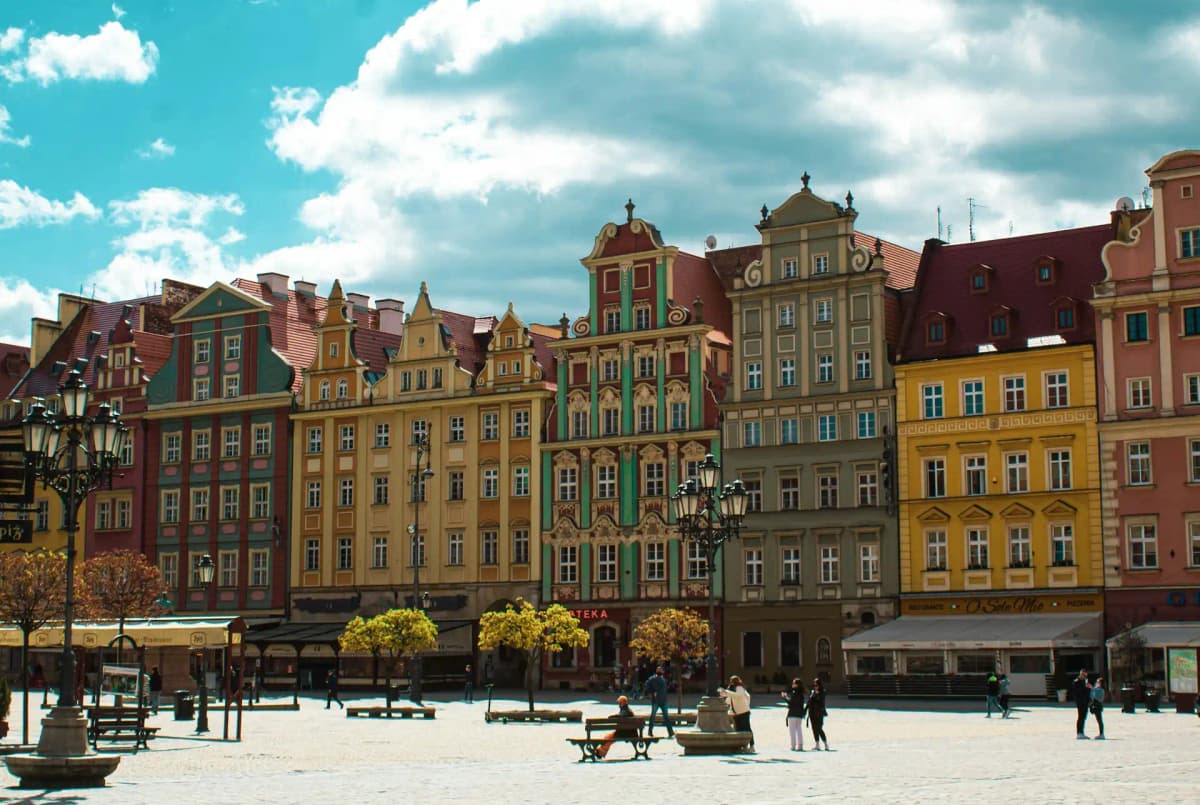
Poland landscape

Poland

Explore weather trends, climate data, and curated weather guides for Poland

Poland Climate Intelligence

Nestled in the heart of Central Europe, Poland experiences a temperate climate marked by four distinct seasons. Expect cold, snowy winters, followed by a vibrant spring, warm summers perfect for exploring, and a crisp autumn painted in brilliant colors. From ski trips to seaside getaways, Poland offers something for every season. Planning your trip or strategizing your business operations? Discover detailed weather and climate insights on WeatherBox to make the most of Poland's diverse climate!

Average Temperature & Seasonal Trends in Poland

How do temperatures shift month-by-month?

Temperature Map

How to Use This Map

  • Watch Seasons Change

    Click the Play button to start an animated timelapse of annual temperature shifts.

  • Explore Month-by-Month

    Drag the slider controls to pause on specific months and visualize detailed conditions.

Key Summary
  • Poland experiences a classic Central European climate with four distinct seasons, marked by warm summers and cold, snowy winters.
  • The Baltic coast has a milder maritime influence, while the southern mountains and eastern lowlands endure colder winters and warmer summer spells.
  • As the WeatherBox temperature map illustrates, average summer highs typically range from 20°C to 25°C (68°F–77°F), and winter lows often dip to between -5°C and -10°C (23°F–14°F).

Poland sits at the crossroads of moist Atlantic air and dry continental winds, which creates a climate of striking seasonal shifts. Across the country’s mostly low-lying northern and central plains, summer days are comfortably warm, with afternoon temperatures usually reaching 22°C–25°C (72°F–77°F). The warmest months, July and August, occasionally bring short hot spells where highs can touch 30°C (86°F) in cities like Warsaw or Wrocław, though sea breezes keep the northern coastline noticeably cooler. Winter transforms the landscape into a chilly, often snow-covered tableau. From December to February, daytime temperatures hover around 0°C (32°F), but nights frequently plummet to -5°C or lower, especially when cold air sweeps in from the east. The WeatherBox temperature map highlights this gentle gradient, with the coldest pockets consistently found in the country’s northeastern reaches.

Geography carves Poland into distinct temperature zones that any visitor will notice. The slender Baltic coast enjoys a tempered climate: winters here are less severe, with fewer deep-freeze days, while summers remain refreshingly moderate, making Gdańsk and the sandy Hel Peninsula a pleasant escape when inland cities bake. Inland, the vast central lowlands see sharper extremes. The Masovian plain, home to Warsaw, feels the full force of continental influence, with crisp, snow-dusted winters and humid summer afternoons that can feel muggy during heatwaves. Heading south, the terrain rises into the Carpathian foothills and the Tatra Mountains. Kraków and the surrounding Małopolska region often record colder, longer winters with persistent snow, ideal for the winter-sports hub of Zakopane, where snow-blanketed slopes can persist into spring. Summer highs in these highlands are gentler, rarely exceeding 20°C–23°C (68°F–73°F), offering a cool sanctuary from the lowland heat. The WeatherBox temperature map makes these regional contrasts immediately visible, showing how latitude and relief shape Poland’s temperature story.

For travellers, Poland’s temperature patterns define two optimal windows of comfortable exploration. Late spring (May to mid-June) and early autumn (September to early October) deliver pleasant daytime highs of 15°C–20°C (59°F–68°F), with fewer crowds and a crisp, clear light that is ideal for strolling through Kraków’s historic quarters or the reconstructed charm of Gdańsk’s Main Town. Mid-summer brings the warmest weather and lively street festivals, but also occasional thundery downpours and the chance of muggy heat in urban centres, so packing light, breathable fabrics and a raincoat is wise. Winter visits present a frosty world of Christmas markets and low-season solitude, with temperatures that often stay below freezing. A heavy coat, sturdy insulated boots, and thermal layers are essential for exploring snowy cityscapes or the frost-draped Tatra valleys. Whichever season draws you, Poland serves a vivid temperature tapestry that rewards thoughtful planning. For deeper data and scalable maps to shape your itinerary, explore the full range of resources on WeatherBox.

Regional Humidity & Dew Point Patterns in Poland

How does humidity vary across the country?

Humidity Map

Key Summary
  • Poland’s transitional climate produces moderate humidity year-round, with generally comfortable summers broken by brief muggy spells.
  • The Baltic coast and lake districts see persistently higher moisture levels, while inland and southern uplands often feel drier, especially in winter.
  • The highest chance of uncomfortable humidity arrives in July and August, when warm, stagnant air can make major cities feel oppressive for short periods.

Poland’s geographical position between the moist Atlantic and the dry Eurasian interior gives it a changeable humidity profile that rarely settles into extremes. Using long-term observations from our WeatherBox charts, we see that summer afternoons typically register relative humidity in the 60–75% range, climbing to over 90% during cool nights and misty mornings. This means you may encounter a muggy spell while walking the riverside boulevards of Warsaw, but the discomfort normally softens as evening breezes arrive. Spring and early autumn bring the most comfortable conditions, with humidity often settling between 50% and 70%, ideal for unhurried sightseeing. When winter tightens its grip, the cold air holds little moisture, so even the dampest Baltic days feel more like a raw chill than tropical stickiness. As indicated by the WeatherBox humidity map, the highest comfort index scores tend to cluster across the lowland interior during late spring and golden early autumn weeks.

Geography draws clear lines across the humidity map. The Pomeranian coast, from the shipyard city of Gdańsk to the sandy beaches of Sopot, stays noticeably muggy through summer, as sea breezes carry moisture that often lingers into grey, dewy afternoons. Further inland, the central plains around Poznań and Łódź swing more sharply: a heatwave can turn an ordinary July day into a *very muggy* affair, the air thick with evaporated soil moisture, yet a fresh westerly front often restores comfortable humidity within a day or two. The southern highlands, from Wrocław to the Tatra foothills, usually offer drier air. Kraków’s old market square might feel oppressive for a few hours during a high-summer scorcher, but the humidity rarely matches the coastal heaviness. Refer to the WeatherBox humidity map to see these regional contrasts clearly.

For travellers, timing is everything. Late May to early June and the whole of September deliver comfortable humidity for wandering the cobbled lanes of Kazimierz or exploring the salt‑carved chapels of Wieliczka; you can pack light layers and a windbreaker without worrying about clammy air. July and August bring the warmest days alongside the highest risk of muggy discomfort, particularly away from the coast, so breathable fabrics and a water bottle become essential companions for a Baltic strand afternoon or a city-centre walking tour. Coastal and lake‑country excursions from spring through early autumn call for a waterproof shell, because elevated moisture can swiftly turn into fine, clingy drizzle. Poland’s winters are cold and dry, making humidity a non‑issue, and the season rewards visitors with frosty Old Town scenery and rich indoor culture. Despite occasional sticky spells, Poland very rarely endures prolonged oppressive humidity, and its climate remains more manageable than many anticipate. We invite you to explore the interactive humidity maps on WeatherBox to find the most humidity-friendly regions for your travel dates and step confidently into Poland’s freshly scrubbed landscapes.

How to Use This Map

Humidity Comfort Levels
Dry
Comfortable
Uncomfortable
Muggy
Very Muggy
Oppressive
  • Watch Seasons Change

    Click the Play button to start an animated timelapse of annual humidity shifts.

  • Explore Month-by-Month

    Drag the slider controls to pause on specific months and visualize detailed conditions.

  • Find Your Comfort Zone

    Use these insights to identify the ideal time to visit Poland based on your weather preferences.

Climate Zones of Poland (Köppen-Geiger Map)

What are the climate zones of Poland?

Climate Map

Climate Classification Legend

Tropical
Af
Am
Aw
As
Dry
BWh
BWk
BSh
BSk
Temperate
Csa
Csb
Csc
Cwa
Cwb
Cwc
Cfa
Cfb
Cfc
Continental
Dsa
Dsb
Dsc
Dsd
Dwa
Dwb
Dwc
Dwd
Dfa
Dfb
Dfc
Dfd
Polar
ET
EF
Key Summary
  • Poland’s climate is largely humid continental (Dfb), with a narrow oceanic (Cfb) strip along the Baltic coast and a pocket of subarctic (Dfc) in the Tatra Mountains.
  • Geography drives a strong east-west gradient: maritime breezes moderate the northwest, while the interior and east experience sharper seasonal swings and colder winters.
  • Rainfall is common year-round, with summer thunderstorms and steady winter snowfall, especially in the southern highlands.

Poland sits at the crossroads of maritime and continental air masses, which gives nearly all of the country a humid continental (Dfb) classification under the Köppen system. Only the Baltic shoreline, from Szczecin to Gdańsk, falls into an oceanic (Cfb) zone, where the sea tempers winter cold and summer heat. Far to the south, the Tatra peaks push into subarctic (Dfc) territory with short, cool summers and deep winter snow. In our climate charts on WeatherBox, you can trace how prevailing westerly winds sweep moist Atlantic air across the plains, keeping rainfall well distributed throughout the year and preventing any true dry season. Temperatures typically range from –5°C to 0°C (23–32°F) in deep winter to 18–24°C (64–75°F) in midsummer for lowland areas, while the coast rarely dips far below freezing and the mountains stay much cooler.

The Baltic coast enjoys the gentlest winter in Poland; Gdańsk’s cobbled streets and Sopot’s sandy beaches, for instance, often see daytime thaws even in January. This oceanic influence means fewer snow days but more persistent drizzle and overcast skies from autumn into spring. East of the Vistula River, the climate becomes more continental: Warsaw and Lublin experience stubbornly high humidity in July and August, when afternoon thunderstorms can build quickly, and winters that often drop to –10°C (14°F) or lower under clear night skies. Kraków and the southern uplands feel the same continental bite but are framed by the looming Tatras, where subarctic (Dfc) conditions deliver a wintry snowpack from December to March. That snowy blanket nurtures the spruce forests of the Tatrzański Park and keeps the lively market squares of Zakopane dusted white, ideal for a mulled wine after a gentle valley walk. Across the country, spring and early summer bring lush greenery to historic parks like Łazienki and the ancient Białowieża Forest, fed by steady rain.

For most visitors, late spring (May) and early autumn (September) strike the best balance. Temperatures typically sit in the 12–20°C (54–68°F) range, skies are often clear, and the peak summer crowds have not yet arrived. Midsummer (June–August) brings the warmest weather for strolling along the dazzling Baltic beaches or attending outdoor music festivals, but you will need an umbrella for sudden downpours and light, breathable fabrics for the high humidity. Winter (December–February) is a different delight: Christmas markets in Wrocław and Kraków glow under early dark skies, and the Tatra slopes offer skiing that relies on that subarctic snow. Pack a heavy coat, insulated boots, and thermal layers from late November through March, because temperatures frequently plunge well below freezing across the interior. No matter the season, a raincoat and comfortable walking shoes belong in your suitcase; Poland’s skies rarely stay dry for long. WeatherBox’s detailed maps and historical charts let you compare monthly rainfall, sunshine hours, and temperature swings, so you can pick the ideal window for your journey. Whether you prefer the mild sea breezes of Gdańsk, the crisp winter air of the Tatras, or the golden autumn light over Warsaw’s Old Town, Poland’s blend of humid continental and oceanic climates result in a distinct experience in every season. Explore our interactive Köppen map and detailed climate data on WeatherBox to start planning well-informed travels.

Find places with your ideal climate

Use our Climate Finder to search and rank locations by their temperature and humidity patterns.

Open Climate Finder

Compare Weather
in Poland

See how temperatures, sunshine, and rainfall differ between any two locations on Earth

Poland flag
WarsawPoland
Change
Poland flag
KrakowPoland
Change

Weather Guides

Explore comprehensive annual weather and climate insights for 86 locations in Poland

Explore other locations in Europe