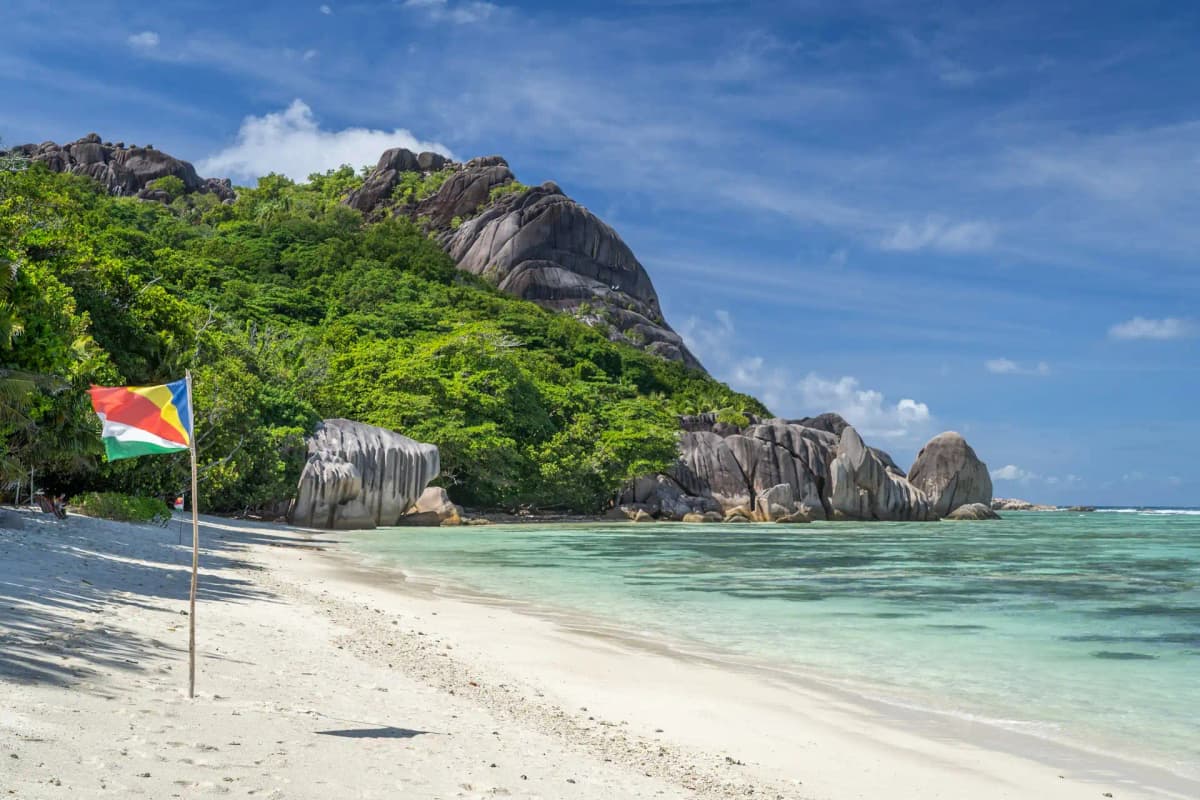

Seychelles
Explore weather trends, climate data, and curated weather guides for Seychelles
Average Temperature & Seasonal Trends in Seychelles
How do temperatures shift month-by-month?
Temperature MapSeychelles Temperature Map
How to Use This Map
- Watch Seasons Change
Click the Play button to start an animated timelapse of annual temperature shifts.
- Explore Month-by-Month
Drag the slider controls to pause on specific months and visualize detailed conditions.
- Seychelles maintains steady tropical warmth year-round, with daytime highs of 28°C to 31°C (82°F to 88°F) and minimal monthly variation.
- The drier southeast trade winds from May to September bring slightly cooler, more comfortable conditions, while the warm northwest monsoon (November to March) raises humidity and feels stickier.
- Elevation provides the only real temperature contrast; the forested heights of Mahé are a degree or two fresher than the sun-baked outer coral atolls.
Nestled just south of the equator, Seychelles experiences a classic tropical maritime climate that keeps air temperatures remarkably stable all year. You will find warm, balmy conditions whether you visit in January or July. As the WeatherBox temperature map confirms, average daily highs across the main islands hover between 28°C and 31°C (82°F to 88°F), while overnight lows rarely dip below 24°C (75°F). This narrow range makes the archipelago one of the most thermally predictable destinations on earth. The surrounding ocean buffers against extreme heat, and spikes into the mid-30s Celsius (95°F) are unusual. What changes noticeably, however, is humidity, which reshapes how the temperature actually feels on your skin.
The seasonal pattern revolves around two monsoon phases that interact with the islands’ varied geography. From mid-May to September, the drier southeast trade winds dominate, pushing somewhat cooler air and brisk breezes onto exposed eastern and southern coasts. This is when the heat feels most manageable, especially on the granitic inner islands where forested peaks like those in Morne Seychellois National Park offer a slight natural cool-down. Flat coral cays and atolls see less relief and can feel hotter. The warm northwest monsoon arrives from late November to March, replacing the breezes with lighter, moisture-laden winds. Actual air temperatures shift little, but higher humidity and fleeting tropical showers make days feel stickier and nights more sultry. Between these monsoons, the calm transitional months of April and October typically deliver a near-ideal blend of warm, settled weather and gloriously clear skies for spotting whale sharks near Mahé’s marine parks or snorkelling the shallow reefs of the St. Anne Marine National Park. The WeatherBox temperature map picks out these subtle contrasts, with slightly cooler pockets aligning with higher ground and the warmest air pooling in sheltered lowlands.
For travel planning, this guide suggests two distinct experiences. The southeast monsoon window (June to September) is ideal for active exploration: hiking the Vallée de Mai, cycling on La Digue, or sightseeing in Victoria without oppressive humidity. Expect blustery afternoons on windward beaches, and pack a light waterproof layer for passing showers. The northwest monsoon (November to March) draws those seeking calm seas and bath-warm shallows for lazy beach days, but you trade comfort for stickier air and a greater chance of brief downpours. Pack light, breathable fabrics, high-SPF sunscreen, a wide-brimmed hat, and a compact raincoat; a sudden shower can arrive even in the driest stretches. The steady warmth means you can leave sweaters and jackets behind, bringing only a light wrap for air-conditioned interiors. Ultimately, Seychelles’ perpetual summer-like warmth, tempered by the trade winds that sweep across atoll and peak, is its calling card. For month-by-month temperature averages and deeper travel insights, explore the detailed data and interactive charts on WeatherBox.
Regional Humidity & Dew Point Patterns in Seychelles
How does humidity vary across the country?
Humidity MapSeychelles Humidity Map
- Equatorial warmth and open ocean keep Seychelles in a muggy to oppressive humidity band year-round, with only small seasonal dips.
- The granitic inner islands trap moist air against their peaks, while coral atolls rely solely on breezes to lighten the tropical stickiness, as the WeatherBox humidity map shows.
- The rhythm of the northwest monsoon and southeast trade winds dictates whether you encounter drizzly, heavy air or slightly fresher but still very moist conditions.
Seychelles sits just south of the equator in the balmy western Indian Ocean, a position that provides high atmospheric moisture. Our data shows relative humidity hovering between 80 and 85 per cent throughout the year, placing the islands firmly in the muggy to very muggy category on the WeatherBox humidity comfort index most afternoons. Even during the depths of the night, readings rarely slip into comfortable territory. The ocean itself acts as a vast humidifier, feeding the air with evaporated warmth, while the country’s lush equatorial vegetation—coconut palms, takamaka trees, and dense hillside forest—transpires still more moisture into the lower atmosphere. What you feel on the skin, then, is a near-constant embrace of thick, salty air that peaks during the morning hours and barely relents after sunset. This isn’t a place of crisp dryness; it is a place where a sheen of sweat arrives within minutes and your towel may never fully dry. The WeatherBox humidity map highlights how uniformly this saturated air blankets the archipelago, with only subtle geographic nicks in the pattern.
Although Seychelles’ 115 islands share the same broad humidity story, the interplay of topography and wind sculpts small but noticeable differences. The inner granitic islands—Mahé, Praslin, and La Digue—are hilly, with Mahé’s Morne Seychellois climbing over 900 metres. When the southeast trade winds settle in from May to September, they sweep onto windward coasts with a gentler, albeit still muggy, marine freshness. On these slopes, you may find the air closer to muggy rather than oppressive, especially in the mornings. Leeward shores, shielded from the breeze, often stew in heavier stillness, as the WeatherBox humidity map underlines. The northwest monsoon, dominant from November to March, brings slack winds and drizzly spells, particularly to these inner heights, bathing the mist-draped trails of Morne Seychellois National Park in sweat-inducing moisture. Far-flung coral atolls like Aldabra and Cosmoledo have no topography to trap humidity. Here, relentless sun beats on flat, low-lying scrub, but the trade winds flow unimpeded across the lagoons, making the oppressive heat fractionally more bearable. Still, our comfort index confirms that no corner of Seychelles escapes the overarching tropical saturation for long.
For the travelling public, this meteorological reality frames every beach sunrise and forest walk. The transition months of April and May, then October and November, are widely regarded as the sweet spot. During these lulls between the monsoons, the humidity ebbs just enough to feel slightly less taxing while seas remain placid for island-hopping and snorkelling the crystal shallows around St. Pierre islet. The northwest monsoon months, though punctuated by tropical downpours and stubbornly high mugginess, cloak the islands in emerald brilliance—a fine time for photographing the giant tortoises of Curieuse Island between rain showers that break the stupor. The southeast trade wind season delivers drier skies and lively breezes, yet the humidity stays resolutely moist; it simply feels less cloying when the wind is moving. Pack accordingly: light, breathable fabrics, sturdy sun protection, a dependable raincoat, and a mindset that accepts you will be damp much of the day. Seychelles is not a destination for crisp, dry air, but its bath-warm breezes, generous shade trees, and turquoise waters have a way of making the tropic moisture part of the experience rather than an obstacle. Explore WeatherBox for more humidity data and travel planning insights.
How to Use This Map
- Watch Seasons Change
Click the Play button to start an animated timelapse of annual humidity shifts.
- Explore Month-by-Month
Drag the slider controls to pause on specific months and visualize detailed conditions.
- Find Your Comfort Zone
Use these insights to identify the ideal time to visit Seychelles based on your weather preferences.
Climate Zones of Seychelles (Köppen-Geiger Map)
What are the climate zones of Seychelles?
Climate MapSeychelles Climate Map
Climate Classification Legend
- Seychelles has a tropical rainforest climate (Köppen Af) with warm, humid conditions that remain stable throughout the year.
- Seasonal rainfall is driven by alternating monsoon winds, with the northwest monsoon bringing deluges from December to March and the drier southeast trades dominating May to September.
- The granitic inner islands create pronounced rain shadows, giving windward coasts and highlands persistent lushness while leeward shores stay noticeably drier.
Seychelles sits just south of the equator, placing every island squarely inside the tropical rainforest climate zone, coded Af in the Köppen classification. This means temperatures hover in a narrow, sticky band, typically from 24°C to 32°C (75°F to 90°F), and humidity remains stubbornly high whether you are in January or July. The granitic inner islands, including Mahé and Praslin, rise sharply from the Indian Ocean with peaks above 900 metres. These mountains wring moisture from the prevailing winds, feeding the dense emerald canopies of places like Morne Seychellois National Park on the windward slopes. The outer coral atolls, such as Aldabra and Farquhar, sit barely above sea level and receive less orographic rainfall, but still bake in the same humid, equatorial air. The WeatherBox Köppen climate map for Seychelles captures this complete Af coverage, underlining how the entire archipelago shares a world of warm, moist maritime air.
Seasonal rhythm comes from the monsoon shift rather than any true dry month. From December to March, the northwest monsoon pushes moisture-laden air onto the northern and western shores, triggering frequent, intense downpours. That is when the dripping palm groves of Vallée de Mai on Praslin are at their most sodden and spectacular, and the waterfalls inland roar. From May to September, the southeast trade winds take over, blowing steady and drier across the islands. Windward eastern coasts can still see brief showers, but the leeward western bays bask in long sunny spells. The famous Anse Lazio on Praslin’s northwest tip may get hammered by monsoon storms in January, yet sit as a calm, sun-drenched crescent in July. Even the outer atolls feel this rhythm, with noticeably less rain arriving during the southeast trades, though they never truly dry out.
For travel, this climate choreographs two prime windows. The April and May and October and November transition months offer the most settled seas, with glassy lagoons ideal for snorkelling amid turtles in the St. Anne Marine National Park or spotting whale sharks off the outer islands. The northwest monsoon season remains hot and humid, and while the lush brilliance of the landscape is dazzling, heavy afternoon cloudbursts can repeatedly scrub beach plans. The southeast trades bring breezy, cooler-feeling air, but stronger winds churn open waters, making exposed strands rough for swimming. Packing for Seychelles means light, breathable fabrics, high-SPF sunscreen, a broad hat, and a sturdy raincoat for sudden equatorial showers. The steady warmth and soft maritime light make any month lush and inviting, but the shoulder seasons deliver the most sublime conditions for a classic island escape. To plan around monsoon shifts and local rainfall patterns, explore our detailed charts and monthly breakdowns on WeatherBox.
Find places with your ideal climate
Use our Climate Finder to search and rank locations by their temperature and humidity patterns.
Weather Guides
Explore comprehensive annual weather and climate insights for 1 locations in Seychelles